 SAINTS FOR ALL SEASONS
SAINT TERESA OF CALCUTTA
By Cliff Garvey
The word mercy has its roots in the Latin word misericordia, which comes from two other words: miseria which mean misery, affliction, and wretchedness; and cor which means heart. In this way, mercy means a heart that cares about the hardships of others. To be merciful is to pity, to have compassion for, and to suffer with those who suffer.
Saint Thomas Aquinas (1225-1274) once wrote: “To say that a person is merciful is like saying that one is sorrowful at heart, afflicted with sorrow by the misery of another person as though that sorrow is one’s own sorrow. Hence it follows that we strive to relieve the misery of another person as though it were our own misery (STh I, q. 21, a. 3).” A merciful person sees the suffering of others and seeks to soothe it.
This is Saint Teresa of Calcutta. Mother Teresa once said to a reporter: “We are misunderstood. We are misrepresented. We are misreported. We are not nurses. We are not doctors. We are not teachers. We are not social workers. We are religious. We are religious. We are religious.” In other words, Mother Teresa’s lifelong commitment to living the Gospel and sharing God’s merciful love was not a profession. It was her calling. It was her vocation as a Christian disciple.
In his announcement of the Jubilee Year of Mercy (2015-2016), Pope Francis said: “We must constantly contemplate the mystery of mercy. It is a wellspring of joy, serenity, and peace. And our salvation depends on it.” The pope continued: “Mercy: the word reveals the very mystery of the Most Holy Trinity. Mercy: the ultimate and supreme act by which God comes to meet us. Mercy: the fundamental law that dwells in the heart of every person who looks sincerely into the eyes of his brothers and sisters on the path of life. Mercy: the bridge that connects God and man, opening our hearts to the hope of being loved forever despite our sinfulness (MV2).” According to the Holy Father, mercy is an expression of an all-encompassing love. Mercy is the movement of love in a world that is sick, sinful, and suffering.
This, too, is Saint Teresa of Calcutta. By living mercy, Mother Teresa introduced the Father, Son, and Holy Spirit into the lives of the poor and the sick. By living mercy, Mother Teresa brought people closer to Christ and closer to each other through simple acts of caring and kindness. By living mercy, Mother Teresa looked into the eyes of the sick and suffering, saw them as children of God, then washed their dirty bodies, tended their open wounds, and fulfilled the Lord’s law of love. By living mercy, Mother Teresa closed the gap between God, God’s Church, and those who are lost, left behind, or forgotten.
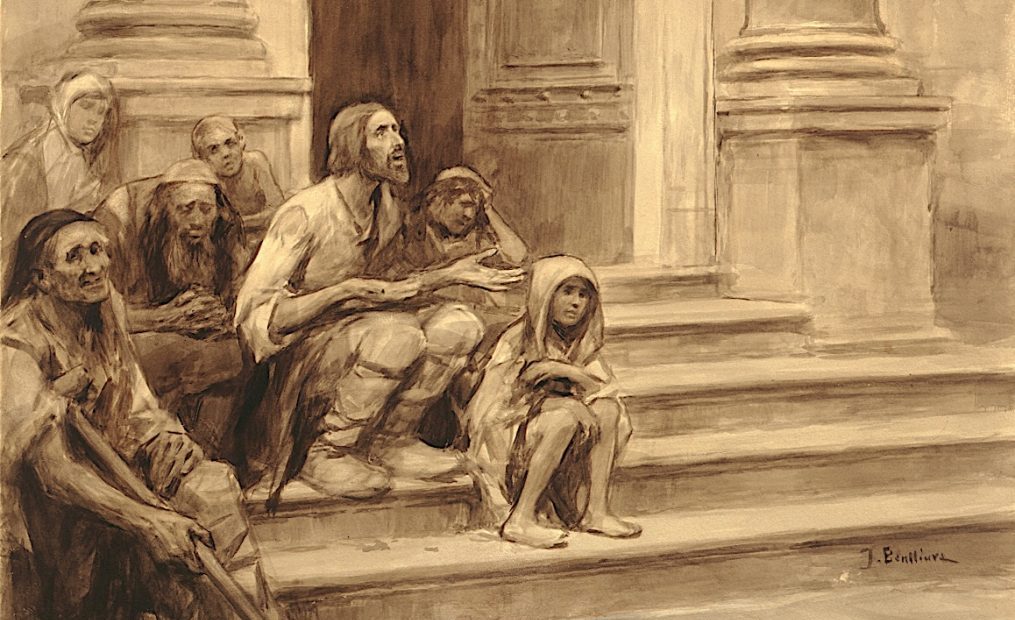
In a profound and literal way, Mother Teresa put into practice one of the most challenging statements in the entire Gospel of Christ: “Whatever you do to the least of my brothers and sisters you did also to me (Matthew 25:40).” Mother Teresa shared God’s love and mercy in a concrete and compelling way. She looked for the poorest of the poor, the sickest of the sick, and the weakest of the weak. She found them all on the streets of Calcutta in India.
First, she founded a school. But then with eyes filled with love and mercy, she saw the poor and the sick in the slums. She begged for food and supplies. She experienced doubt, despair, and discouragement. At the same time, her ministry attracted young women who shared her passion.
In 1950, with permission from the Vatican, Mother Teresa founded the Missionaries of Charity. Giving voice to their shared mission, she wrote: “The aim of the Missionary Sisters of Charity is to devote themselves heart and soul and exclusively to the material and spiritual welfare of all destitute people: the helpless poor, the neglected children, the abandoned, the sick, the lepers, and the deserving beggars, in short all those unfortunate people who either through their own neglect or through lack of public concern, are left to drift through life without help or hope.”
At the time of her death, the Missionaries of Charity operated more than five hundred missions in more than one hundred countries. At the time of her death, the Missionaries of Charity numbered more than four thousand sisters, more than three hundred associated priests and brothers, and thousands of volunteers around the world. They operate schools, orphanages, soup kitchens, counseling programs for families with children, and homes and hospices for people living with diseases like leprosy, tuberculosis, and HIV-AIDS.
Mother Teresa did not believe that she and her co-workers had all of the answers to all of the problems facing the poor, the sick, the suffering, and the left behind. She did believe, however, that she had a vocation, a calling from God, to find the neediest among us and to help them now, to serve them now, to love them now. She said: “What I can do, you cannot. What you can do, I cannot. But together, we can do something beautiful for God.” That something beautiful is mercy in action. That something beautiful is love in action. That something beautiful is loving as Jesus loves, helping as Jesus helps, giving as Jesus gives, serving as Jesus serves, all without counting the cost.
Mother Teresa practiced universal love and respect for every human person — no matter who they are, no matter what they believe, no matter what they’ve done in this life. She did not judge. She respected all faiths and cultures. She sought to be humble and to serve with simplicity. She acted out of love for God and neighbor, not for honors, publicity, or recognition.
Mother Teresa did not think of herself as an innovator, leader, or saint. She saw herself as a sinner and a servant. She saw herself in the eyes of a poor beggar, in the face of an orphaned child, and in the body of an AIDS patient ravaged by disease. When Jesus appeared to Mother Teresa and invited her to serve the poor, he said: “You are the most incapable person, weak and sinful, but just because you are that, I want to use you for my glory!”
Mother Teresa did not speak of big plans or grand ideologies to change the world or solve the world’s problems. She lived the Gospel and shared God’s love and mercy by being attentive to the world around her, by seeing the poor and the sick in her own neighborhood, and by tending to their basic needs. One on one. Person to person. Soul by soul. She once said: “I do not agree with a big way of doing things. What matters is the individual. If we wait until we get numbers, then we will be lost in the numbers, and we will never be able to show love and respect for the one person in need.”
Mother Teresa won the Nobel Peace Prize (1979). She received countless awards and honorary degrees. She was recognized as one of the ten most admired women in the world eighteen times. A Gallup Poll placed her at the top of the list as the most admired person of the twentieth century. And yet, Mother Teresa was still criticized for being demanding and difficult. She was attacked for not being an outspoken advocate for women’s rights and for being an outspoken opponent of abortion. Christopher Hitchens, the best-selling author and atheist, once wrote that Mother Teresa was more interested in increasing the number of Catholics than in decreasing the number of those who are poor and sick. Despite these criticisms, no one can credibly doubt Mother Teresa’s commitment to living the Gospel of Christ, sharing God’s love and mercy, and serving those in real need.
Over and over again, Pope Francis has said: “The name of God is mercy.” And Father Murray Bodo has written: “It is this God that Pope Francis has been called to reveal to us again by reminding us by his words and actions that we are called individually and as a Church to be the face of God’s mercy to the broken and the rejected. The Church, like God, must be mercy; it must open its heart to wretchedness.”
During the course of her long life, Mother Teresa opened her heart and her arms to embrace the wretched, the broken, the poor, the sick, the left out, and the left behind. She offered them a meal, a prayer, a bath, a kind word, a helping hand, and a way back. She offered them the dignity that is owed to every child of God, every brother and sister of the Poor Christ. She offered them a share in God’s love. She offered them a share in God’s mercy. She invited them into God’s house, gave them a seat at God’s table, and reminded them of their sacred place in God’s heavenly kingdom.
From the communion of saints and the choir of angels, she now calls us to continue her work. She says: “Do not look for big things, just do small things with great love.” Inspired by her life, energized by her example, and strengthened by her prayers, we can look into the heart of our parish and into the eyes of our neighbors. We can look for ways to help, ways to lift up, ways to be agents of God’s love, ways to be messengers of God’s mercy, ways to be instruments of God’s peace. In the words of Mother Teresa: “Yesterday is gone. Tomorrow has not yet come. We have only today. Let us begin.”
Glory to the Father, to the Son, and to the Holy Spirit; as it was in the beginning, is now, and will be forever. Amen. Saint Francis of Assisi, pray for us! Saint Clare of Assisi, pray for us! Saint Teresa of Calcutta, pray for us! Our Lady of the Angels, pray for us!

About the Author
Cliff Garvey is a co-founder of the Assisi Project. He is a graduate of the University of Southern Maine, Saint John Seminary College, and the Catholic University of America. Cliff is a writer, spiritual director, retreat leader, and university lecturer. He also serves as Associate Minister of the Catholic Community of Gloucester & Rockport in Massachusetts where his ministry focuses on adult faith formation. Thank you for listening to With Great Love – Saint Teresa of Calcutta. The Assisi Project Podcast is produced by the Assisi Project, Inc. For more information about the Assisi Project: A Fellowship of Franciscans in Spirit and our programs and ministries for adults of all ages and backgrounds, please contact Cliff Garvey at cgarvey@assisiproject.com. Copyright 2023. All rights reserved. May the Lord give you peace!
Art Credit: Juliana Stepashova | Image 196636710 | Dreamstime.com
__________
About Us
Founded in 2007, the Assisi Project is a Fellowship of Franciscans in Spirit with friends and followers throughout the world. We are dedicated to helping Christian believers of all ages more faithfully live the Gospel of Christ in the spirit of Saint Francis and Saint Clare of Assisi. The Assisi Project is a non-profit, tax exempt charitable organization. All are welcome to support our ministry via PayPal (see link below); or by sending a tax-deductible donation to the Assisi Project, Post Office Box 3158, Gloucester, Massachusetts 01931-3158. For more information about the Assisi Project, please contact Cliff Garvey at cgarvey@assisiproject.com. May the Lord give you peace!
Support us via PayPal
Follow us on Twitter: @Assisi_Project
This Week’s Homepage
For the Ministry of the Missionaries of Charity
 The Assisi Project