 LEARNING FROM THE HOLY ROSARY
By Brother Patrick
As a child, I was blessed to have bonded with all four of my grandparents. Each of them had something unique to teach me about being kind, generous, and a good neighbor. Each of them had something unique to teach me about faith, hope, love, and the ways of the world.
My paternal grandmother, Mary Mesko Garvey, was an elder daughter of immigrant parents who had ten other children. Although my grandmother was a good student, she left high school before graduating in order to help her family make ends meet. Later, she was the mother of two sons who were born during the Second World War. My grandmother loved her husband and her boys, but hard times made her a force of nature. She was fierce, tough, tenacious, and a disciplinarian.
As a grandmother, however, she softened quite a lot. When I stayed weekends with my grandparents, my grandmother often read to me from an old set of Childcraft Books that she had purchased for her own children years earlier. In these books were poems, famous speeches by famous people, and stories about saints, heroes, and villains. Time and time again, I was enchanted. These stories fueled my curiosity, my imagination, and my lifelong love of books and reading.
Before turning off the light at night and again before getting up in the morning, my grandmother prayed with me: the Lord’s Prayer, the Hail Mary, and the Twenty-Third Psalm. In all my life, I never knew my grandmother to enter a church except for a wedding or funeral. And yet, she was a woman of faith. She learned these prayers and she felt called to share them with her eldest grandson. By clarity of speech and repetition, my grandmother impressed upon me that these prayers were important to learn and keep close to my heart.
These childhood prayers would become the foundation of an adult and mature faith. My grandmother never spoke about these prayers beyond the bedroom walls. But in a very real way, she lived the Good News of Christ. In the Gospel of Matthew (5-6, 9-13) Jesus says:
When you pray,
do not be like the hypocrites;
for they love to stand and pray
in the synagogues and on the street corners,
so that they may be seen by others.
Truly I tell you, they have received their reward.
But when you pray,
go into your room and shut the door
and pray to your Father in secret;
and your Father who sees in secret
will reward you…
Pray, then, in this way:
Our Father in heaven,
hallowed be your name.
Your kingdom come.
Your will be done on earth as in heaven.
Give us this day our daily bread.
Forgive us our sins,
as we forgive those who sin against us.
Save us from the time of trial,
rescue us from the evil one.
From the Lord’s Prayer, we learn a lot about God. He lives in heaven. His name is blessed, holy, and sacred. His plans should be our plans. God give us what we need. God forgives us when we love and forgive others. And God has the power to save us and rescue us from any and all things that might harm us.
In this way, my grandmother was my first and best catechist. Her prayers were my first and best lessons about God, Jesus, and the Blessed Mother. There were other catechists over the years. There were other books and other lessons. There were movies and television shows, most notably the Davey & Goliath series, that taught me so much about the Christian life.
Now consider the Christian life before modern technology. During the thirteenth century, during the life and times of Francis and Clare of Assisi, before the printing press, and before books were widely available and affordable, the walls, windows, and ceilings of great churches were the primary way that common people like us learned about God, about Jesus, and about the Blessed Mother.
In the Basilica of Saint Francis in Assisi (Upper Church), we find images of Jesus and his disciples, Saint Francis, and the Blessed Mother. We see large paintings (or frescoes) depicting thirty-two scenes from the sacred scriptures. From these images, God’s people learned about the Old Testament — from the creation of the world to Joseph forgiving his brothers. From these images, God’s people learned about the New Testament — from the Annunciation of Mary to the discovery of the Risen Lord’s empty tomb. From these images, God’s family learned about the Crucifixion of Jesus and the devotion of Saint Francis to the Poor Christ.
All around the medieval world, the walls, windows, and ceilings of churches shared the message of God’s power, God’s love, and God’s mercy. But it was not enough. In order to learn these sacred lessons, people actually needed to enter the churches. They need to pause, pray, and be silent. They needed time to think and pray about these sacred images. They needed time to open their hearts and minds to the message.
But then as now, people worked long and hard. They were preoccupied with finding food, firewood, and shelter for their families. They needed to protect what little they had from the corrupt and the criminal. Then as now, some people, but certainly not all people, had the time to sit in church and pray. So, the Church needed more ways to share the faith.
One early tradition was to simply count prayers on a knotted rope. Saint Patrick, for example, who lived during the fifth century, prayed the Lord’s Prayer as many as 150 times every day. This number matches the number of songs and prayers in the Book of Psalms. Six hundred years after Saint Patrick, the people began to count a new prayer on beads or that same kind of knotted rope. We know this prayer as the Hail Mary (c. 1050). Two centuries after the Hail Mary became popular, tradition teaches us that the Blessed Mother revealed to Saint Dominic (1170-1221) the devotion we know now as the Holy Rosary.
Then as now, the Rosary is regarded as a powerful remedy against heresy and unfaithfulness. The Rosary is also the perfect tool for catechesis. Each of its mysteries is a meditation on an episode in the Holy Gospel. Each of its mysteries is a meditation on the life, death, and resurrection of Jesus. Each of its mysteries is a meditation on the joy, sorrow, glory, and eternal light personified by Jesus and his Blessed Mother.
If prayed mindfully, the Rosary can teach us much of what we need to know about the Good News of Christ. It teaches us about joy, prayer, and suffering. It teaches us about patience and perseverance. It teaches us about vocation and acceptance. The Rosary teaches us about love of God, love of family, and love of neighbor. It teaches us about miracles, about angels and heaven, and about the healing power of God. It teaches us the difference between light and darkness.
The Rosary brings us closer to Mary, the Mother of God. It brings us closer to Jesus, the Son of God. It brings us closer to the Church, the People of God. And it brings us closer to God himself — the giver of all good gifts, the creator of heaven and earth, and the master of the universe. Spiritual fads come and go. The Rosary endures.
Pope Francis says: “In the prayer of the Rosary, we turn to the Virgin Mary so that she may bring us ever closer to her son Jesus, so that we may know him and love him more and more. This simple prayer helps us to contemplate all that God, in his love, has done for us and for our salvation, and it allows us to understand that our lives are united with the life of Christ. By praying the Rosary, we allow God to enter into our time, to welcome and transfigure all that we experience in our lives.”
Pope Francis also offers us three compelling reasons to make the Rosary a central component of our spiritual lives. First, it is a good “compendium” or summary of the entire history of salvation. Second, it is a “powerful weapon against evil.” Third, it is an “effective means of obtaining true peace in our hearts.” Think on these words. Pray with them.
The Holy Father speaks of the Rosary as a way to encounter, learn about, and think about Jesus. It is a way to bring Jesus into our daily lives. It is a way to bring him into the lives of those we love. It is a prayer that protects, teaches, and unites. It is a prayer that makes miracles. It is a prayer that brings peace. With all of these lessons in mind, we pray:
O Blessed Virgin Mary,
Our Lady of the Rosary,
grant that our praying of your Rosary,
in the midst of our daily work,
may be for us a bond of unity,
a tribute of devoted faith,
a sweet refreshment,
and an encouragement to walk joyfully
along the path of life.
Above all, O Blessed Virgin Mary,
grant that the study of your mysteries
may form in our souls, little by little,
a luminous atmosphere,
pure, fragrant, and strengthening;
and that it may penetrate our hearts,
our wills, our memories,
our imaginations, our understanding,
and our whole being.
In this way, may we learn the habit
of praying as we work,
both with formal prayers,
and with concrete actions
of devotion, petition, and love.
Our Lady of the Rosary, we beg this of you
in communion with Christ Jesus, your Son,
who lives and reigns
with the Father and the Holy Spirit,
God forever and ever. Amen.
Glory to the Father, to the Son, and to the Holy Spirit; as it was in the beginning, is now, and will be forever. Amen. Saint Francis of Assisi, pray for us! Saint Clare of Assisi, pray for us! Our Lady of the Angels, pray for us! Our Lady of the Rosary, pray for us!
ABOUT THE AUTHOR
Brother Patrick Garvey is a co-founder of the Assisi Project. He is a graduate of the University of Southern Maine, Saint John Seminary, and the Catholic University of America. He is a writer, spiritual director, retreat leader, and university lecturer. He also serves as Associate Minister of the Catholic Community of Gloucester & Rockport in Massachusetts. In 2023, on the Feast of the Transitus of Saint Francis of Assisi, Brother Patrick was consecrated as a diocesan hermit by Bishop Mark O’Connell, Vicar General of the Archdiocese of Boston. For more information about the Assisi Project and our programs and ministries for adults of all ages and backgrounds, please contact Brother Patrick at brpatrick@assisiproject.com.
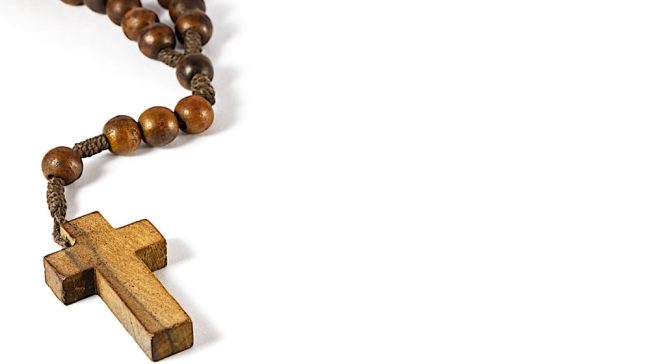
Art Credit: Puwadol Jaturawutthichai – Photo 35897006 – Dreamstime.com
__________
ABOUT US
Founded in 2007, the Assisi Project is a Fellowship of Franciscans in Spirit with friends and followers throughout the world. We are dedicated to helping Christian believers of all ages more faithfully live the Gospel of Christ in the spirit of Saint Francis and Saint Clare of Assisi. The Assisi Project is a non-profit, tax exempt charitable organization. All are welcome to support our ministry via Pay Pal (see link below) or by mailing a tax-deductible donation to the Assisi Project, Post Office Box 3158, Gloucester, Massachusetts 01931-3158. The Assisi Project Podcast is Produced by the Assisi Project, Inc. Copyright 2023. All rights reserved. May the Lord give you peace!
Support us via PayPal
Follow us on Instagram
This Week’s Homepage
For Peace in Our Suffering World
 The Assisi Project