PILGRIMS OF HOPE
SERVANT OF GOD THEA BOWMAN
By Brother Patrick
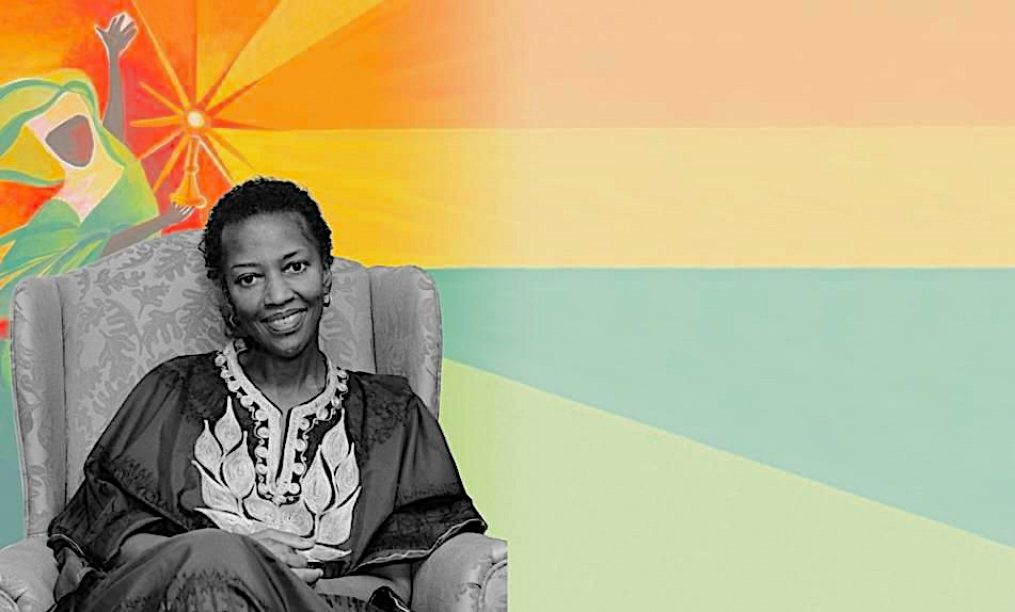
Canton is a small town in Central Mississippi. During the Civl War, countless wounded and dying soldiers were treated or buried there. It remains home to one of the largest Confederate cemeteries in the country. Bertha Elizabeth Bowman was born there on December 29, 1937. She was the grandchild of slaves. Her mother was a teacher. Her father was a physician. As a child, she was nicknamed after him, Dr. Theon Bowman. Thea means “of God.”
Although raised in a Methodist family, Thea was educated at Holy Child Jesus School, one of the state’s first Catholic and racially integrated private academies. At the age of nine, Thea was given permission by her parents to convert to Roman Catholicism. At the age of fifteen, Thea’s parents reluctantly allowed her to become the first African American member of the Franciscan Sisters of Perpetual Adoration. In 1965, she earned an undergraduate degree from Viterbo University in Wisconsin. In 1969 and 1972, she earned graduate degrees in English from the Catholic University of America.
After nearly two decades as an educator, the Bishop of Jackson invited her to advise the diocese on race and intercultural awareness. Sister Thea then embarked on her life’s mission to give witness to the African American experience in the Catholic Church. She traveled the country. She traveled the world. She gave at least one hundred talks every year to audience of both black and white church goers. She was blunt, joyful, and captivating. She encouraged the faithful and the clergy to embrace the diversity of race, dance and music, prayer and spirituality, life experience and liturgical practice in the Church.
In a profile for America Magazine in 2014, Christopher Pramuk wrote: “Arguably no person in recent memory did more to resist and transform the sad legacy of segregation and racism in the Catholic Church than Thea Bowman…who inspired millions with her singing and her message of God’s love for all races and faiths. Sister Thea awakened a sense of fellowship in people both within and well beyond the Catholic world, first and foremost through her charismatic presence. But she also did it through her willingness to speak the truth about racial injustice in society and in the Church, and through her remarkable ability to express such truths in the context of God’s universal love (6-24-14).”
In 1984, in the midst of growing influence and popularity, Sister Thea was diagnosed with breast cancer. She chose a difficult course of treatment, but the cancer spread to her bones. She said: “Part of my approach to illness has been to say that I want to choose life. I want to keep going. I want to live fully until I die.” Despite a terminal prognosis, she kept up her busy speaking schedule.
The climax of Sister Thea Bowman’s life and ministry may have been her address just months before her death to the United States Conference of Catholic Bishops (USCCB). In constant pain and confined to a wheelchair, Sister Thea described her experience as an African American Catholic. She reminded the bishops of the dark history of slavery and segregation: Poverty. Ignorance. Lack of health care. Broken and separated families. High rates of crime, suicide, and substance abuse. And a seemingly endless cycle of violence and intimidation.
Sister Thea reminded the bishops of longstanding policies that often excluded blacks from ordained ministry and consecrated life. She then joyfully reminded the bishops that their African American brothers and sisters share both in the history of the United States and in the history of the Catholic Church in the United States.
Sister Thea said: “Our people, black people, helped to build this nation in cotton and grain, and beans and vegetables, and brick and mortar. They cleared the land and cooked the food that they grew. They cleaned houses and built churches, some of them Catholic churches. They built railroads and bridges and national monuments. Black people defended this country as sailors and soldiers. Black people taught and molded and raised children.”
She called the bishops to embrace the gift of African American history. She begged them not to fear it. She then asked: “What does it mean to be black and Catholic?” She answered; “I bring myself, my black self; all that I am, all that I have, all that I hope to become. I bring my whole history, my traditions, my experience, my culture, my African American song and dance, and gesture and movement, and teaching and preaching, and healing and responsibility as gifts to the Church.”
Sister Thea told the bishops about the faith that African American people bring to the Church. It is a faith that is deeply rooted in scripture. It is a faith that is joyful even in sorrow. It is a faith that is holistic: bringing together body, mind, and emotion. It is a faith that is common: of the people, by the people, for the people; all walking and working together in God’s vineyard. And it is a faith that “leans on the Lord.”
She then lectured the bishops on their responsibilities. She told them that their job is “to enable the people of God to do the work of the Church…Your job is to enable me, to enable God’s people — black people, white people, proud people, all the people — to do the work of the Church in the modern world.”
In additional to its sacramental ministry, Sister Thea believed that the work of the Church is all about healing, serving, preaching, teaching, witnessing, worshipping, and reconciling the sins of the past with hopes for the future. She said to the bishops: “We are called to walk together toward that Land of Promise and to celebrate who we are and whose we are not…The Church is a family of families, and the family must stay together…if we walk and talk and work and play and stand together in Jesus’ name, then we will be who we say we are — truly Catholic. And we shall overcome. We shall overcome the poverty, overcome the loneliness, overcome the alienation, and build together a holy city, a new Jerusalem, a city set apart, where everyone will know that we are here because we love one another.”
Sister Thea Bowman passed from this life on March 30, 1990. Her headstone reads simply: “She tried.” In 2018, the bishops voted to formally consider the cause for her canonization. Although this process could take many years, Sister Thea Bowman is now a Servant of God. We can pray for her; and we can ask her to pray for us, for our divided country, and for our suffering world.
Sister Thea once said: “People think they have to do big things in order to make change. But if each one of us would light a candle, we would have a tremendous light.” More than three decades after her death, her candle still enlightens the Church. Sister Thea Bowman was an agent of change, a prophet of diversity, and a voice of radical welcome. Sister Thea Bowmn was a pilgrim of hope.
Glory to the Father, to the Son, and to the Holy Spirit; as it was in the beginning, is now, and will be forever. Amen. Servant of God Thea Bowman, pray for us! Saint Francis of Assisi, pray for us! Saint Clare of Assisi, pray for us! Our Lady of the Angels, pray for us!
ABOUT THE AUTHOR
Brother Patrick Garvey is co-founder and spiritual director of the Assisi Project. He is a graduate of the University of Southern Maine, Saint John Seminary, and the Catholic University of America. He is a writer, spiritual director, retreat leader, and university lecturer. He also serves as an Associate Minister in the Catholic Community of Gloucester & Rockport in Massachusetts. On October 3, 2023, the Feast of the Transitus of Saint Francis of Assisi, Brother Patrick was consecrated as a diocesan hermit by Bishop Mark O’Connell, Vicar General of the Archdiocese of Boston. For more information about the Assisi Project and our ministries with adults of all ages and backgrounds, please contact Brother Patrick at brpatrick@assisiproject.com.
__________
ABOUT US
Founded in 2007, the Assisi Project is a Fellowship of Franciscans in Spirit with friends and followers throughout the world. We are dedicated to helping Christian believers of all ages more faithfully live the Gospel of Christ in the spirit of Saint Francis and Saint Clare of Assisi. The Assisi Project is a non-profit, tax exempt charitable organization. Please support our ministry via Pay Pal (see link below) or mail a tax-deductible donation to the Assisi Project, Post Office Box 3158, Gloucester, Massachusetts 01931-3158. The Assisi Project Podcast is produced by the Assisi Project, Inc. Copyright 2025. All rights reserved. May God bless you! May the Lord give you peace!
Support us via PayPal
Follow us on BlueSky
Follow us on Instagram
This Week’s Homepage
In Memory of Helen F. Morley
 The Assisi Project