PILGRIMS OF HOPE
DIETRICH BONHOEFFER
By Brother Patrick
It is June 1939. A second world war is about to begin. Dietrich Bonhoeffer arrives in New York City at the invitation of the Union Theological Seminary. But Bonhoeffer is uneasy. He regrets leaving Germany. He is already planning to go back. He says: “I will have no right to participate in the reconstruction of Christian life in Germany after the war if I do not share the trials of these times with my people.”
Dietrich Bonhoeffer can save himself, but he returns to Germany. He returns to the Cross. He is already well known at home, especially to Adolph Hitler and the resistance movement that seeks to undermine his authority. In 1933, Bonhoeffer delivers a radio address that hails Hitler not as führer, which means guide or leader, but as verführer, which means seducer or misleader. Bonhoeffer then accepts a position as pastor of two German-speaking churches in London. But his real mission there is to build an ecumenical alliance against Hitler and the Nazis.
In 1934, Bonhoeffer signs the Barmen Declaration. It insists on the separation of church and state. It calls Nazism a perversion of the Holy Gospel. In 1935, Bonhoeffer is offered an opportunity to learn about non-violent resistance from Mahatma Gandhi. But mindful of the pastoral needs of people at home, Bonhoeffer returns to Germany. He becomes rector of an underground seminary that is dedicated to training ministers in the principles of peaceful protest.
In 1936, the government revokes Bonhoeffer’s license to teach. He is denounced as “a pacifist and an enemy of the state.” In 1937, the government closes his seminary. Many of the students and instructors are arrested. But Bonhoeffer avoids arrest. He spends the next two years traveling secretly from village to village. He continues the formation of his students in a so-called “seminary on the run.”
During this time, Bonhoeffer writes with prophetic voice about his future: “The Cross is not the terrible end of a pious happy life. Instead, it stands as the beginning of our communion with Christ. Whenever Christ calls us, his calls leads to death (Discipleship, 87).”
In 1938, Bonhoeffer is banned from Berlin, but he continues to speak out against Hitler. In one sermon, he preaches: “Your ‘yes’ to God demands your ‘no’ to all injustice, to all evil, to all lies, to all oppression and violation of the weak and the poor, to all godlessness and mocking of the holy. Your ‘yes’ to God demands a brave ‘no’ to everything that will ever hinder you from serving God alone, whether it be your profession, your property, your house, or your honor before the world (Collected Sermons, 203).”
In 1941, Bonhoeffer is forbidden to publish his sermons and theological reflections. Around this time, Bonhoeffer joins the Abwehr, the German military’s intelligence service. His brother-in-law convinces the government that the young pastor’s contacts with faith leaders around the world will be useful to the German war effort. But Bonhoeffer continues to serve the resistance. He acts as a courier to the Western Allies. He helps German Jews escape to Switzerland. He knows all about the plots to assassinate Hitler.
Bonhoeffer embraces his treason. He writes: “When a man takes guilt upon himself in responsibility, he imputes his guilt to himself and no one else. He answers for it…Before others, he is justified by dire necessity. Before himself, he is acquitted by conscience. But before God, he hopes only for grace (Ethics, 244).”
On April 5, 1943, Dietrich Bonhoeffer is arrested. For two years, he serves as pastor to prisoners and prison guards alike. He continues to write letters and sermons. His mail is smuggled in and out by sympathetic guards. On April 4, 1945, the Abwehr’s conspiracy to undermine the Nazi regime is discovered. In a rage, Adolph Hitler personally orders the execution of every member of the military intelligence service.
Dietrich Bonhoeffer is denied all civil rights. A mock trial is held. No defense is permitted. No evidence is presented. No witnesses are called. The verdict is guilty. The sentence is death. As Bonhoeffer is led away, he speaks these last words: “This is the end, but for me it is the beginning of life!” On April 9, 1945, Bonhoeffer is stripped, brought naked into the prison yard, and hanged by the neck.
An eyewitness describes the execution: “I saw Pastor Bonhoeffer…kneeling on the floor, praying fervently to God. I was deeply moved by the way this lovable man prayed, so devout and so certain that God heard his prayer. At the place of execution, he again said a short prayer, then climbed the few steps to the gallows, brave and composed. His death ensued after a few seconds. In almost fifty years as a doctor, I have hardly ever seen a man die so entirely submissive to the will of God.”
History now suggests that Dietrich Bonhoeffer may have been tortured before his execution. Either way, Dietrich Bonhoeffer embraces the cross. He clings to it as an instrument of God’s grace. He clings to it as an expression of God’s love. About his life and fate, he writes: “This remains an experience of incomparable value. We have for once learned to see the great events of world history from below, from the perspective of the outcasts, the suspects, and the maltreated; in short, from the perspective of those who suffer.”
Dietrich Bonhoeffer is a courageous pastor who seeks to overcome evil with goodness. Dietrich Bonhoeffer is a martyr for the Gospel of Christ. Dietrich Bonhoeffer is indeed a pilgrim of hope. Glory to the Father, to the Son, and to the Holy Spirit; as it was in the beginning, is now, and will be forever. Amen.

ABOUT THE AUTHOR
Brother Patrick Garvey is co-founder and spiritual director of the Assisi Project. He is a graduate of the University of Southern Maine, Saint John Seminary, and the Catholic University of America. He is a writer, spiritual director, retreat leader, and university lecturer. He also serves as an Associate Minister in the Catholic Community of Gloucester & Rockport in Massachusetts. On October 3, 2023, the Feast of the Transitus of Saint Francis of Assisi, Brother Patrick was consecrated as a diocesan hermit by Bishop Mark O’Connell, Vicar General of the Archdiocese of Boston. For more information about the Assisi Project and our ministries with adults of all ages and backgrounds, please contact Brother Patrick at brpatrick@assisiproject.com.
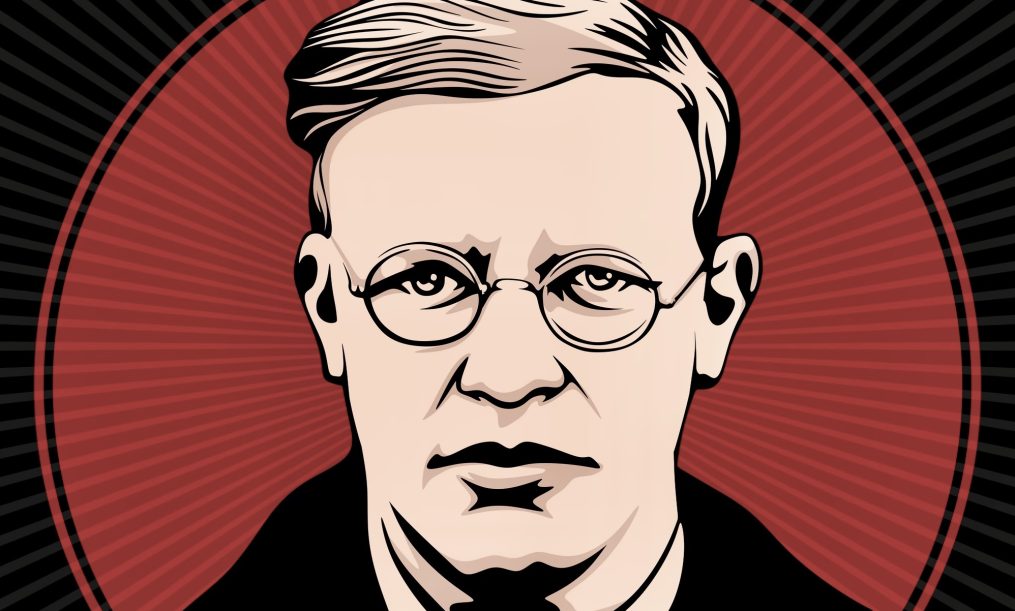
Art Credit: Biblebox – 194720065 – Dreamstime
__________
ABOUT US
Founded in 2007, the Assisi Project is a Fellowship of Franciscans in Spirit with friends and followers throughout the world. We are dedicated to helping Christian believers of all ages more faithfully live the Gospel of Christ in the spirit of Saint Francis and Saint Clare of Assisi. The Assisi Project is a non-profit, tax exempt charitable organization. Please support our ministry via Pay Pal (see link below) or mail a tax-deductible donation to the Assisi Project, Post Office Box 3158, Gloucester, Massachusetts 01931-3158. The Assisi Project Podcast is produced by the Assisi Project, Inc. Copyright 2025. All rights reserved. May God bless you! May the Lord give you peace!
Support us via PayPal
Follow us on BlueSky
Follow us on Instagram
This Week’s Homepage
In Memory of Reverend Mark L. Noonan
 The Assisi Project