PILGRIMS OF HOPE
DAG HAMMARSKJÖLD
By Brother Patrick
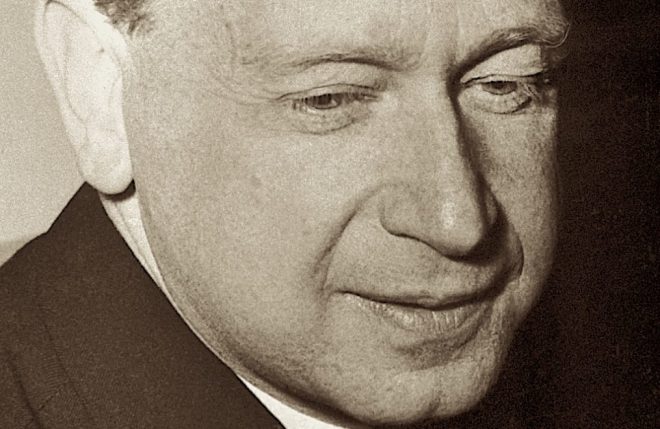
Dag Hammarskjöld served as Secretary General of the United Nations from 1953 until 1961. On September 18, 1961, Dag Hammarskjöld traveled to Africa in order to negotiate a cease fire between warring factions in the newly independent nation of Congo.
Hammarskjöld was aboard a Douglas DC9. At approximately 1:00am, a flash of light was seen from the ground. Moments later, the plane crashed. All fifteen passengers perished. Dag Hammarskjöld was just fifty-six years old. Although there was no evidence of a bomb, hijacking, or missile attack, the cause of the crash remains a mystery.
Former President Harry S. Truman suggested that Dag Hammarskjöld was assassinated by the Soviet Union which was seeking to assert its influence in Central Africa. Several eye witnesses swore that the plane was shot down. One survivor, who died soon after the crash, claimed that three explosions preceded it. An official investigation concluded that pilot error was the cause of the crash. But another investigation by Archbishop Desmond Tutu of South Africa concluded that the flight was sabotaged.
Other investigations raised serious questions. Why were bullet wounds found in two bodyguards who died in the crash? Why was Dag Hammarskjöld’s body the only one found without burn injuries? And why was his body found with a hole in the center of his forehead?
More than six decades later, the mystery surrounding Dag Hammarskjöld’s death should not overshadow the accomplishments of his life. He was trained as a lawyer and economist. He never joined a political party. But for nearly two decades, he held important government positions in Sweden: State Secretary for the Ministry of Finance, Cabinet Secretary for the Ministry of Foreign Affairs, Delegate to the Parish Conference (that established the Marshall Plan), and Vice Chair of Sweden’s Delegation to the United Nations.
In April 1953, after months of indecision, the United Nations voted unanimously to appoint Dag Hammarskjöld as its Second Secretary General. Hammarskjöld then visited every department. He shook the hand of every staff member. He ate in the employee cafeteria. He converted his private elevator into a public one. And he opened a prayer and meditation room so that employees could retreat to a quiet space regardless of their creed or religion.
On the global stage, Hammarskjöld welcomed the Holy See into the United Nations. He worked tirelessly to improve relations between Egypt and Israel. He negotiated the release of eleven American pilots who were captured during the Korean War. He created the first United Nations Peacekeeping Force that ensured safe passage through the Suez Canal. And although his actions prompted fierce criticism from the Soviet Union and its satellites, Dag Hammarskjöld was committed to negotiating a peaceful solution to civil unrest in Congo.
Shortly after Dag Hammarskjöld’s death, he was awarded the Nobel Peace Prize. In a letter to Time Magazine, one reader wrote: “As though I had lost a dear and personal friend, I wept bitter tears of sorrow and regret at the news of the death of a great and good man, a true and courageous gentleman. He belonged not to his native land alone, but to all the free world.”
President John F. Kennedy said: “I realize now that in comparison to him, I am a small man. He was the greatest statesman of our century.” In accepting his own Nobel Peace Prize, Albert Lutuli of the African National Congress said: “How many times his decisions helped to avert a world catastrophe will never be known.” And in accepting the Nobel Peace Prize on behalf of the Hammarskjöld Family, Rolph Edberg said: “No one who met him could help noticing that he had a room of quiet within himself.”
It was this “room of quiet” that first drew me to Dag Hammarskjöld. He lived and died before I was born. But in the early 1980s, while watching a Leo Buscaglia special on public television, I heard about Dag Hammarskjöld for the first time. Dr. Buscaglia, famous for his lectures and writings about the nature of love, talked a lot about him. Like so many others, Buscaglia spoke about Hammarskjöld’s work ethic, his commitment to peacemaking, and his unique ability to reach out to people of different races, religions, and cultural experiences.
Buscaglia also spoke about Dag Hammarskjöld’s loneliness. A public figure without a private life. A global celebrity with an introvert’s personality. No wife. No children. Surrounded by people of all kinds but few close friends. Dag Hammarskjöld’s life, it seems, was his work. When we dig deeply, however, we find that he was also a man of faith.
Dag Hammarskjöld did not belong to a church, but he believed in God. He believed in Jesus. He believed in Jesus as both God and brother; as both God and fellow man. He believed in the teachings of Jesus. He believed in living a life of service and sacrifice. And he believed in the redemptive power of the Lord’s sacrifice on the cross. Dag Hammarskjöld also believed that the life, death, and resurrection of Jesus was an unchanging truth in an ever changing world. Although he often doubted himself, Dag Hammarskjöld never doubted his faith.
In his will, Hammarskjöld directed him family to review his long-kept diary and to publish whatever they believed might advance the cause of peace and fraternity in the world. The result was a book called Markings which was published in 1964. It is a collection of short reflections beginning in 1925 and ending with the author’s tragic death. It is now considered a classic of modern spiritual literature.
Exactly one hundred of the entries focus directly on God. Dag Hammarskjöld writes: “I do not know Who — or What — put the question. I do not know when it was put. I do not even remember answering. But at some moment, I did answer ‘Yes’ to Someone — or Something — and from that hour, I was certain that existence is meaningful and that, therefore, my life, in self-surrender, has a goal.”
Themes of faith, vocation, and self-sacrifice dominate the diary. Hammarskjöld writes: “The road to holiness necessarily passes through the world of action.” And “Life only demands from you the strength you possess. Only one feat is possible — not to run away.” And “Pray that your loneliness may spur you into finding something to live for, something great enough to die for.”
In 2015, Pope Francis became the third pope in modern history to address the United Nations General Assembly. In that address, the Holy Father could have mentioned a long list of diplomats, faith leaders, and world leaders “who gave their lives for peace and reconciliation.” But he recognized just one: Dag Hammarskjöld.
Why? Perhaps it was his faith. Perhaps it was his commitment to peace. Perhaps it was his commitment to human rights, social justice, and the brotherhood of man. Or more likely, it was because Pope Francis and Dag Hammarskjöld shared a common loneliness, a common bond of prayer, and a common dilemma of being misunderstood. They shared a common commitment to answer the call to a life of service and sacrifice. They shared a common approach to life and a common core of values: Dialog. Listening. Inclusivity. Fraternity among all peoples. Outreach to the margins of society. Solidarity with the poor and oppressed.
Among the hundreds of brief reflections that comprise Markings are several prayers like this one: “Give me a pure heart that I may see you. A humble heart that I may hear you. A heart of love that I may serve you. A heart of faith that I may abide in you.” Dag Hammarskjöld was a man of faith. Dag Hammarskjöld was a man of peace. Dag Hammarskjöld was a true pilgrim of hope.
Glory to the Father, to the Son, and to the Holy Spirit; as it was in the beginning, is now, and will be forever. Amen. Saint Francis of Assisi, pray for us! Saint Clare of Assisi, pray for us! Our Lady of the Angels, pray for us! Pope Francis, pray for us!

ABOUT THE AUTHOR
Brother Patrick Garvey is co-founder and spiritual director of the Assisi Project. He is a graduate of the University of Southern Maine, Saint John Seminary, and the Catholic University of America. He is a writer, spiritual director, retreat leader, and university lecturer. He also serves as an Associate Minister in the Catholic Community of Gloucester & Rockport in Massachusetts. On October 3, 2023, the Feast of the Transitus of Saint Francis of Assisi, Brother Patrick was consecrated as a diocesan hermit by Bishop Mark O’Connell, Vicar General of the Archdiocese of Boston. For more information about the Assisi Project and our ministries with adults of all ages and backgrounds, please contact Brother Patrick at brpatrick@assisiproject.com.
__________
ABOUT US
Founded in 2007, the Assisi Project is a Fellowship of Franciscans in Spirit with friends and followers throughout the world. We are dedicated to helping Christian believers of all ages more faithfully live the Gospel of Christ in the spirit of Saint Francis and Saint Clare of Assisi. We are also dedicated to promoting a devotion to Pope Francis (1936-2025) as a patron of peace, mercy, and fraternity in our sick and suffering world.
The Assisi Project is a non-profit, tax exempt charitable organization. Please support our ministry via Pay Pal (see link below) or mail a tax-deductible donation to the Assisi Project, Post Office Box 3158, Gloucester, Massachusetts 01931-3158. The Assisi Project Podcast is produced by the Assisi Project, Inc. Copyright 2025. All rights reserved. May the Lord give you peace!
Support us via PayPal
Follow us on BlueSky
Follow us on Instagram
This Week’s Homepage
For Peace, Truth & Justice in Our World
 The Assisi Project